Building Restaurant Loyalty Programs on Delivery Platforms
Summary Highlights
Build a restaurant loyalty program on DoorDash, Uber Eats & Grubhub. Automate rewards and promotions across delivery apps to turn one-time orders into repeat customers.
Restaurants thrive on repeat business, and that’s doubly true when using third-party delivery apps. Building customer loyalty on platforms like DoorDash, Uber Eats, and Grubhub means turning first-time delivery orders into regular customers. A loyalty program – such as points for each order, discounts on repeat visits, or exclusive offers – gives diners a reason to come back. According to industry data, 60% of restaurant revenue comes from repeat guests, so a smart loyalty strategy can dramatically boost sales and ROI.
What is Customer Loyalty on Delivery Apps?
Customer loyalty on delivery apps means encouraging diners to order from your restaurant repeatedly, rather than switching to a competitor. It goes beyond one-time promotions: loyalty involves ongoing rewards and personalization that make customers feel valued. For example, imagine a program where a customer earns a free appetizer after five delivery orders, or receives a birthday discount. These incentives turn a casual delivery user into a habitual patron. Voosh’s tools help track this data – for instance, VooshGPT AI can identify repeat customer patterns and suggest targeted rewards to keep them ordering.
Why Loyalty Matters for Restaurants
Loyal diners spend more and cost less to serve. Retaining existing customers is typically much cheaper than attracting new ones. In fact, research shows 78% of customers will visit a restaurant more often if they can earn points or rewards. When nearly two-thirds of your sales come from repeat guests, it’s clear that loyalty directly fuels revenue. Moreover, loyal customers are more likely to leave positive reviews and recommend you to friends, further boosting your online reputation and discovery in apps. Using Voosh’s Reviews & Reputation Automation can help capture this positive sentiment, turning good delivery experiences into brand advocates.
Key Strategies to Build Loyalty on Third-Party Apps
1. Define compelling rewards. Choose perks that match customer wants and your margins. Options include free items (e.g. a free drink after 3 orders), percentage discounts, or surprise upgrades. Simple programs (like “buy 10 orders, get 1 free”) make it easy to understand. “Keep it valuable but sustainable” – for example, offer a $10 credit after a certain number of orders rather than a steep percentage off every time, to protect your profits.
2. Leverage app-native features. Many delivery platforms let restaurants create and track promotions or loyalty tiers. Use Voosh’s Ads & Promotions Analytics platform to measure which offers drive the most repeat business. Run targeted promotions within apps (like DoorDash’s “Storefront Offers” or Uber Eats coupons) and compare in Voosh which ones boost repeat order rates.
3. Collect and use customer data. Data drives personalization. With VooshGPT and analytics, segment your diners by order history. If a customer regularly orders a burger, send them a promotion on a new burger special. According to a National Restaurant Association report, personalized rewards (like double points after frequent orders) make customers feel recognized and “create a deeper connection”. Voosh can flag high-value repeat customers so you can give them extra perks.
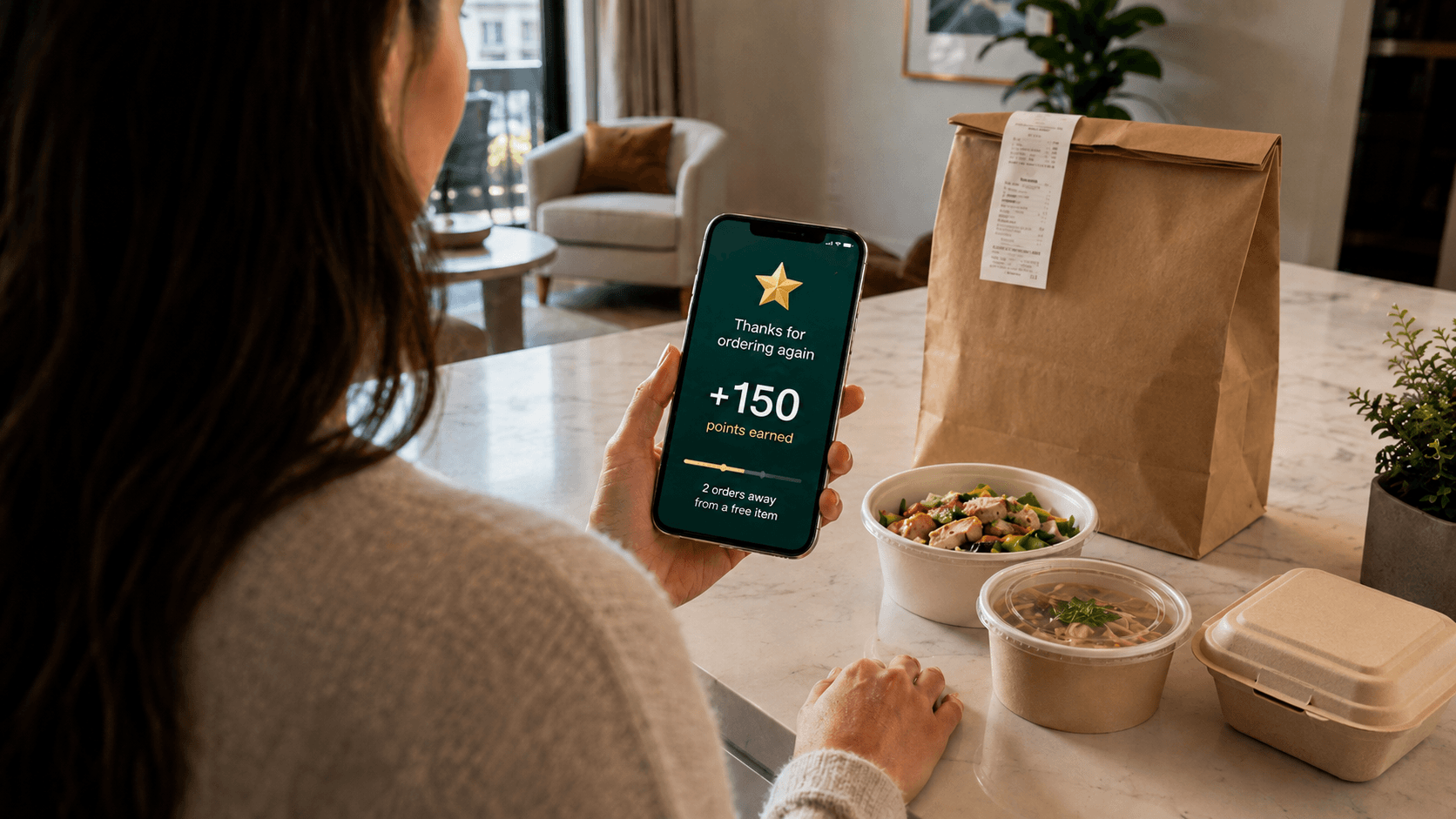
4. Communicate consistently. Don’t let loyal customers forget about their rewards. Use email or SMS to remind them of their points or upcoming rewards. For example: “Hi [Name], you’re 2 orders away from a free dessert!” Personal touches (using their name and order history) can dramatically increase response. Voosh’s data helps you automate these reminders.
5. Implement gamification. Make earning rewards fun. For instance, introduce challenges like “Order from us on five consecutive Mondays to earn bonus points.” As Domino’s “Piece of the Pie” program shows, turning orders into a game encourages engagement. Gamification elements (badges, levels) keep customers checking back to see their progress.
6. Offer exclusivity. Make loyalty members feel special. Early access to a limited-time dish, or a secret off-menu item, can entice customers to join and stay in the program. For example, loyalty members might get a unique discount code or VIP access to new menu previews. This sense of privilege keeps customers engaged and sharing their status with friends.
7. Integrate channels. Ensure loyalty rewards apply across all channels – not just on one app. Whether customers order via your own website, app, or any third-party marketplace, they should earn rewards uniformly. The National Restaurant Association emphasizes seamless multi-channel loyalty for consistency. Voosh unifies data across DoorDash, Uber Eats, Grubhub (and more) so you can manage all rewards in one place.
Using Promotions & Data to Boost Repeat Orders
Effective promotions are the engine of loyalty. For example, bounce-back coupons like “10% off your next delivery” encourage customers to order again soon. However, broad discounts can erode profits if unmanaged. Use Voosh’s dashboards to track promotion ROI: compare the extra revenue from repeat orders against the cost of the discount. Targeted offers (e.g. an upsell on a favorite item) often give better ROI than site-wide coupons.
Analyze the data in Voosh for insights. If VooshGPT flags a dip in orders at a particular time or from a location, launch a flash loyalty deal to re-engage customers. The Olo case study notes that personalized messages (“We miss you, Jack!”) can reawaken lapsed customers. Combine that with an exclusive loyalty perk (e.g. free appetizer on return) to win them back.
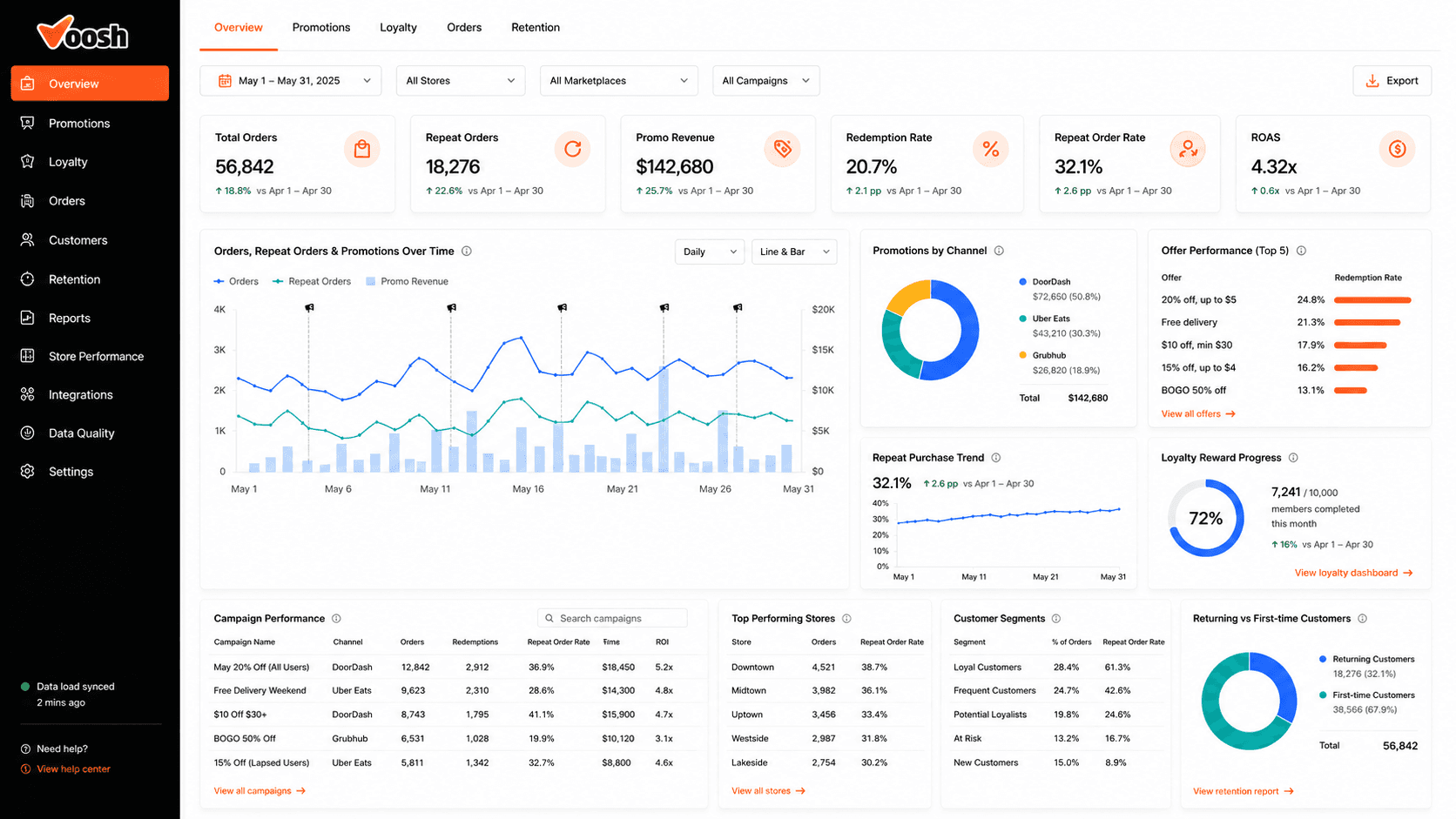
In Voosh’s analytics dashboard, marketers and operators can see how loyalty initiatives impact performance in real time. For instance, chart the repeat-order rate over time; when it rises after launching a new loyalty tier, you know the strategy is working. Always refine based on data: if a reward isn’t driving extra orders, swap it for something your customers prefer.
Avoiding Common Loyalty Pitfalls
- Over-discounting: As Olo’s retention guide warns, unrestricted discounts can shrink margins. Avoid giving away too much “free stuff.” Instead, make the reward conditional (e.g. spend threshold or rare occasions).
- Complex rules: Keep your program easy to understand. Complicated point systems confuse customers. The most successful programs (like Dunkin’ Rewards) use straightforward points or simple thresholds.
- Lack of promotion: Ensure customers know about your program. Promote it in your delivery menu descriptions and post-order emails. Many restaurants send follow-up surveys or confirmations that mention the loyalty benefit.
- Ignoring feedback: Use feedback to improve. Voosh’s centralized review inbox allows you to see what loyal customers say about your service. Respond to feedback quickly to show customers you value them, which in turn reinforces loyalty.
Conclusion & Next Steps
Building loyalty on delivery apps is not an overnight fix, but a sustainable strategy for growth. Start by setting up a simple reward structure and gradually refine it using data. Track how Voosh’s Promotion and Review tools improve repeat orders and ratings. Remember: loyal customers generate the majority of your revenue, so investing in them pays dividends.
Ready to turn your delivery diners into regulars? Book a Voosh demo to see how our Promotions Manager, Reviews & Ratings, and VooshGPT analytics can automate and optimize your loyalty programs.
“By focusing on personalization and seamless rewards, we saw a jump in repeat orders within weeks,” – typical client testimony after enabling Voosh’s loyalty analytics.