Data-Driven Delivery Sales Analytics for Restaurants
Summary Highlights
Use delivery performance data to grow revenue. Our platform consolidates orders and metrics from all channels into one dashboard
Data-Driven Ways to Boost Restaurant Delivery Sales
What if you could know exactly which dishes and tactics drive your delivery orders? Restaurants using multiple delivery apps often feel in the dark about what works. The good news: data can light the way. By tracking the right metrics and acting on insights, you can boost delivery sales without guesswork. In the U.S., nearly 70% of people ordered food delivery last month, and online orders tend to generate about 20% more spending than phone orders. That means every extra insight you squeeze out of the data can directly translate to more revenue. This article shows how to turn delivery data into higher sales, step by step.
Why Data Matters for Your Delivery Strategy
Think of your delivery data as your restaurant’s dashboard – it shows what’s really happening out there. Rather than firing off random discounts or hoping for the best, data lets you target efforts where they’ll count. For example, Deliverect reports that one in three Americans use delivery apps at least twice a week. Ignoring this trend means leaving money on the table. A clear data strategy answers questions like:
Which menu items sell best on Uber Eats vs. DoorDash?
What hours see the most orders?
Where are orders being missed?
With these insights, you stop “spray and pray” marketing and focus on actions that drive orders and profit.
Which Delivery Metrics Should You Track?
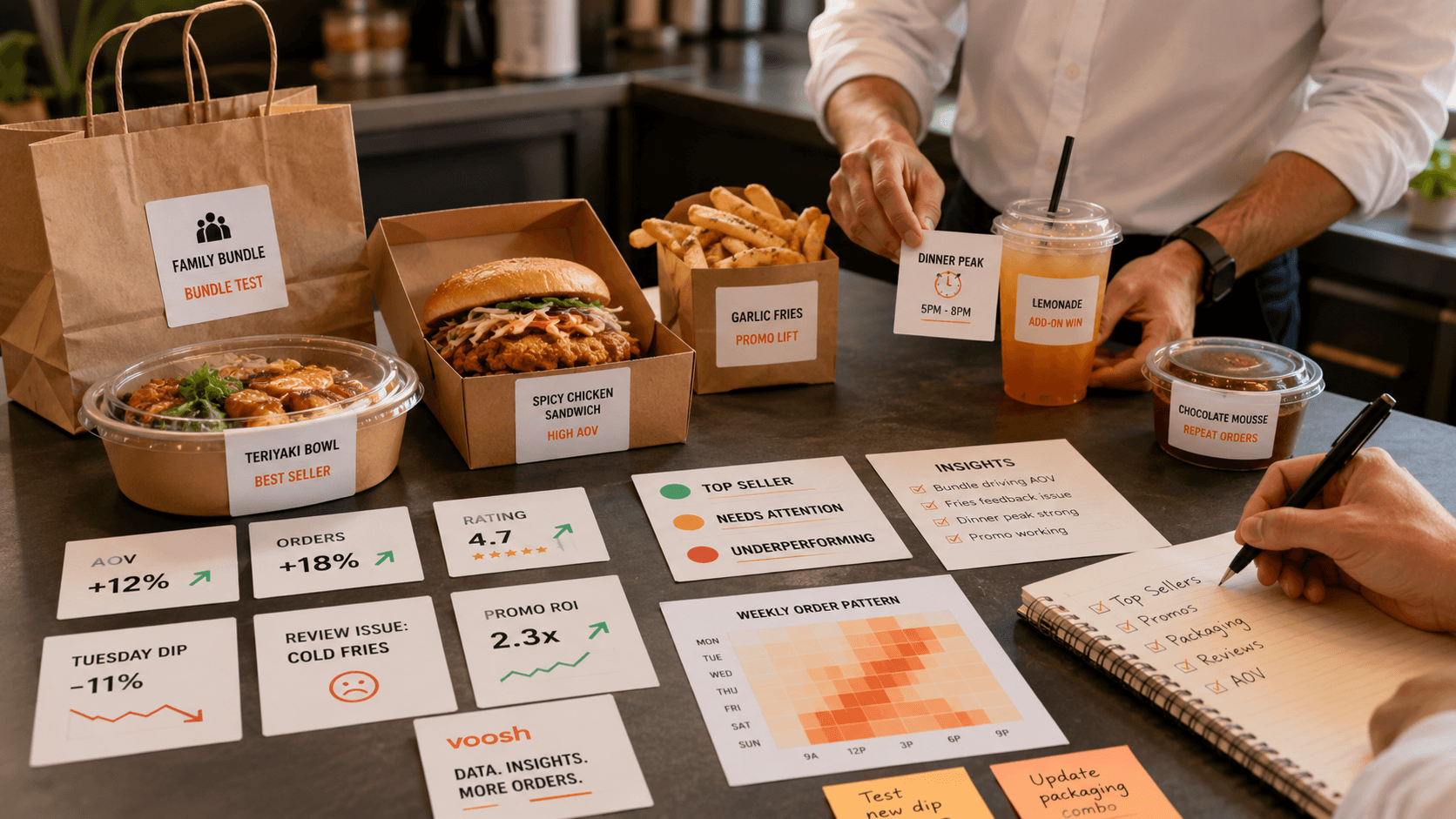
Key Metrics: Sales, orders, average order value, commissions, and customer feedback. Track these on each delivery app. For example:
- Total Delivery Revenue: Compare week-over-week. A rising trend means growth; a flat line means time to tweak something.
- Number of Orders: If orders spike at lunch but slow at dinner, shift staffing or push dinner promotions.
- Average Order Value (AOV): Monitor if promotions or combo deals are lifting AOV.
- Commission Fees: Keep an eye on fees charged by each app. Voosh’s tools can flag unexpected fee spikes or refunds. (Learn more in our payment reconciliation a deposit first playbook guide.)
- Customer Ratings & Comments: Ratings below 4 stars or recurring complaints (e.g. “cold food”) can kill future orders. Track them daily so you can improve menus or packaging.
Regularly reviewing these numbers reveals where the biggest opportunities (or problems) lie. As Deliverect notes, restaurants with online ordering tend to see up to 30% higher takeout profits than those without. That’s because data-savvy restaurants know exactly what to do when a metric dips or climbs.
How to Use Data to Optimize Your Delivery Menu
Your delivery menu shouldn’t be static. Let data guide it. Start by identifying top sellers on each platform. For example, if “Truffle Fries” outsell “Garlic Bread” by 3:1 on delivery, consider promoting fries or adding a deal bundle. Conversely, pull underperformers (low sales, low ratings) off the active menu to streamline the kitchen during peak.
Next, look at pricing and cost data. If an item costs you heavily in fees or ingredients but isn’t selling much, adjust the price or remove it. Voosh customers often find small menu changes boost margins, even a 10-20% bump in a single dish’s sales can pay for a month of software. Our blog on revolutionize your restaurant operations with data driven solutions helps you automate these analyses.
Finally, use menu labeling tests. Tag one version of your menu with “Best Seller” badges on data-backed hits, and see if that nudges orders. Always measure results: did highlighted items’ orders go up? If yes, update the menu permanently. If not, try highlighting something else. This A/B testing approach is commonplace in retail; it’s equally powerful for third-party delivery when backed by sales data.
How Strategic Promotions Drive More Delivery Orders
Promotions and discounts work – but only if targeted. Data tells you when and where to push offers. For example, if delivery orders dip on Tuesdays, run a midweek special on that day only. If morning breakfast delivery is slow, try a “Free Coffee with Any Breakfast” promo from 7-10am.
Always track promotion ROI. If Voosh’s Promotions Manager is available on your platform, it can tie ad spend or discounts to incremental orders. As one industry report notes, restaurants spend 10-15% of revenue on promotions with unclear ROI – data-driven tracking cuts the guesswork. In practice, set a goal (say +10% orders this week) and monitor metrics closely. When the promo ends, compare actual sales to baseline. Often, you’ll discover which promos truly boosted sales vs. those that only ate into your margins.
Use these tips: bundle items (e.g. pizza + salad for $X), highlight value meals during slow hours, or leverage app-specific features (like DoorDash or UberEats coupons). Link each campaign to a tracking metric. Then rinse and repeat only the campaigns that met or exceeded targets.
How to Turn Customer Reviews into Delivery Growth
Customers rarely ask for a loyalty card for delivery – they leave feedback instead. Monitoring and responding to reviews on delivery apps is data too. Negative reviews often cite specific issues (e.g. “order late” or “missing side”), which you can fix immediately. Post-resolution, customers will notice and may give better scores later.
Set up a daily routine: check new reviews across apps and label them (complaint, praise, suggestion). Over time, you’ll see patterns. Maybe many 2-star reviews mention “cold fries”; solution: improve packaging. Many 1-star mentions of “app glitch”? Possibly an app sync problem that Voosh can detect (via our tools).
When customers see you actively respond to feedback, they feel heard and are more likely to order again. Keep in mind: review ratings influence visibility on some apps. A 4.8 vs 4.4 can boost your ranking. By systematically addressing complaints (and encouraging happy customers to leave stars), you improve both reputation and delivery sales.
Steps to Implement a Data-Driven Delivery Plan
1. Consolidate your data. Use a dashboard (like Voosh) to pull orders, fees, and reviews from all apps into one view.
2. Set benchmarks. Record last month’s sales and AOV on each platform. Aim for specific growth (+10% sales, +5% AOV).
3. Analyze early results. After 1–2 weeks, see what changed. Identify winning items, times, and campaigns.
4. Adjust menu and staffing. Drop or promote items, and schedule staff based on busy times (data often reveals surprisingly early or late lunch/dinner peaks).
5. Run targeted promotions. Pick one underperforming slot (slow day or time) and launch a data-informed deal. Track its effect on orders.
6. Review feedback weekly. Address the top 3 issues mentioned by customers. Learn, fix, and repeat.
7. Measure and iterate. Each week, compare against your benchmarks. Double down on strategies that work, and abandon those that don’t.
By following these steps, you’ll create a feedback loop where data constantly guides action. This is how top restaurants use tech: as a partner in decision-making, not just a back-office chore.
Conclusion and Next Steps
In today’s delivery-driven world, guessing is costly. Instead, let the numbers point the way. Using data analytics and consistent tracking can transform your delivery revenue – from menu tweaks and smart promos to better customer reviews. As industry data shows, restaurants with savvy online strategies can boost their takeout profits by up to 30%. Ready to put these insights to work? Start by defining one metric to improve next week (say, weekend dinner sales), and use Voosh’s platform or any analytics tool to monitor it. Over time, small data-driven wins add up to big growth.
🚀 Book a demo with our team to see how Voosh can centralize your delivery data and automate these insights. Give your restaurant the competitive edge with intelligence – not guesswork – and watch your delivery sales climb.