First-Party vs. Third-Party Delivery: Which Is Right for Your Restaurant?
Summary Highlights
Compare first-party and third-party delivery models. Learn how to reduce commission fees, improve order accuracy, and recover profit with Voosh intelligence.
Choosing between in-house delivery and app platforms can make or break your bottom line. We break down the key differences, benefits, and costs of each to help you decide.
First-party delivery means customers order directly from your restaurant’s website or app - you handle the order and delivery. In contrast, third-party delivery uses services like DoorDash, Uber Eats or Grubhub to process orders and send drivers. Each approach has trade-offs. Third-party platforms offer instant reach to millions, but charge hefty commissions (often 15-30%). First-party delivery gives you full control of pricing, branding, and customer data, but requires investment in marketing, tech, and drivers. For example, a 2025 NCR Voyix report found 58% of diners actually prefer ordering directly from restaurants’ apps or websites, which means many customers will come to you if given the choice. Use the guide below to weigh the factors and pick the strategy that maximizes profit and loyalty.
What Are First-Party and Third-Party Delivery?
“First-party” delivery (sometimes called in-house delivery) is when a restaurant takes customer orders on its own website or app and fulfills them itself. All payments, data, and branding remain with the restaurant. Third-party delivery is when a marketplace app (like DoorDash or Uber Eats) takes the order, pays the restaurant, and dispatches a driver. The app provider handles logistics and customer service, but keeps a cut of the order (commissions, fees) and usually retains the customer’s data and communication.
Pros & Cons of Third-Party Delivery
Pros:
Third-party apps instantly plug you into a huge customer base. They handle driver staffing, order tech, and marketing exposure. This can be a huge bonus for new or small restaurants to gain discovery. For example, 63% of young diners use third-party apps for variety, so being on those apps means reaching those customers. Third-party platforms also invest in rapid innovations (GPS tracking, promotions) that you benefit from without any extra work.
Cons:
The big downside is cost and control. Most third-party platforms charge 15-30% commission on each order. On a $50 order, that means the restaurant nets far less than expected. Restaurants often raise menu prices to offset this, which can deter price-sensitive customers. You also lose control over the branding and guest experience – the app’s interface and driver interactions represent your brand, but any mistakes (cold food, wrong order) reflect on you. Importantly, you get no customer data from an app. As Olo’s CEO Noah Glass explains, third-party marketplaces earn 20-30% commission while giving “zero data about who that guest is”. In short, apps can drive volume, but profits can remain slim and guest loyalty limited.
Pros & Cons of First-Party Delivery
Pros:
First-party (in-house) delivery can improve margins and customer loyalty. Every order from your own channel avoids third-party commissions, so more of the ticket goes to you. You control menu prices, promotions, and the whole customer journey. And you collect the data – from loyalty points to favorite items – enabling targeted marketing and repeat business. Industry data show first-party orders tend to be more accurate and personalized. A 2025 Intouch Insight study found 90% accuracy on in-house deliveries, compared to 85% on third-party orders. You can train drivers on your restaurant’s standards, include little extras (napkins, promos) to delight customers, and build your brand voice at every touch. Restaurant Dive notes that first-party channels offer “convenience, customization and loyalty rewards,” making them preferred by many guests.
Cons:
First-party delivery requires upfront investment and operational capacity. You need an online ordering system, delivery staff or partners, and customer support. Technology costs (app development, integrations) and driver payroll or contracts are real expenses. There’s also risk: if orders are late or incorrect, the customer will hold you accountable, even if you rely on third-party drivers (41% of “in-house” orders actually use app drivers). And demand may not immediately appear: if few customers know about your direct channel, you may still need the apps for volume. In sum, first-party gives you more profit per order and better customer relationships, but only if you can execute it well and consistently.
Hybrid Models: Combining Both for Maximum Reach
Many restaurants use a hybrid approach: run your own delivery or pickup channels and stay on major apps. This way you capture broad audiences on apps while rewarding repeat customers on your own. For example, you might list the full menu and run promotions on DoorDash to stay visible, but send email campaigns encouraging loyal customers to order directly (often with a discount or free delivery). The key is clear communication: advertise your website/app on receipts and social media, and provide incentives (loyalty points, specials) to move frequent diners off-app. When done right, you get the best of both worlds: scale plus savings.
Example Step:
Set up a homepage or app order portal and promote it - 58% of diners said they’d prefer to order directly if given the option. Meanwhile, keep your restaurant on at least the top one or two apps in your market to capture casual or new customers. Track which orders are coming from where. Over time, push promotions on your own channel (e.g. a free appetizer with a direct order) while maintaining consistent menu pricing across channels.
How to Decide: Key Factors & Checklist
Choose the strategy that aligns with your restaurant’s size, brand, and financial goals. Consider these factors:
1. Cost Comparison: Calculate your effective cost of delivery. Compare total fees: apps often take 20–30% per order, plus the customer may pay extra for delivery. In-house has upfront costs (drivers’ wages, fuel, tech), but lower variable fees. Use a margin model to see which approach yields better per-order profit.
2. Order Volume & Demand: Do you have enough delivery orders to justify staffing drivers? Small volume means high per-order driver cost. If delivery is <20% of sales, third-party may make sense initially.
3. Customer Experience & Loyalty: If your brand relies on a strong connection (e.g. unique recipes, rewards), owning the experience can pay off. Use first-party to gather data (emails, preferences) and build loyalty programs.
4. Operational Capacity: Do you have spare staff or vehicles? Can you integrate an ordering system with your POS? If not, third-party apps might be an easier start.
5. Competitive Market: In some markets, major apps are expected. If all local peers are on DoorDash and you’re not, you may lose casual diners. Conversely, if apps are oversaturated, being exclusive on your own platform can differentiate you.
6. Legal and Regional Factors: Note regulatory changes (e.g. NYC’s commission caps). Also consider if expanding to new regions (UK/EU, etc.) requires local platforms or in-house models.
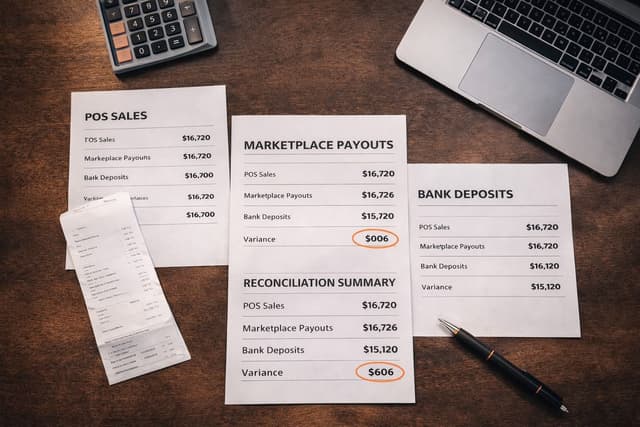
Checklist: Map out your current delivery stack: platforms used, commissions paid, customer feedback, and tech integration. Reconcile past orders to see where profit leaks (e.g. hidden fees or refunds). If the apps’ cost exceeds the revenue they bring, shift to your own channel. Otherwise, use both strategically.
How Voosh Can Help Optimize Your Delivery Strategy
Voosh’s platform isn’t a delivery app - it’s an intelligence layer that works across all channels. Whether you use third-party apps, your own channel, or a hybrid, Voosh can help you:
- Audit Fees & Recover Profit: Automatically match every order’s earnings vs. what should have been paid. Stop missing small adjustments and refunds.
- Analyze Performance: See which channel (DoorDash, Uber, app, etc.) drives the best margin. Intouch data shows in-house orders often have higher satisfaction, Voosh helps you quantify that.
- Manage Disputes Automatically: Any errors (e.g. “order errors” or overcharges on apps) are flagged and disputed right away – so you recover lost revenue without lifting a finger.
- Track Customer Sentiment: If you have reviews on apps, Voosh aggregates feedback to gauge how delivery experience (first vs third party) affects ratings.
- Unified Reporting: Pull all your delivery data (regardless of source) into one dashboard, making it easy to compare metrics and make informed decisions.
Using Voosh alongside your chosen strategy ensures you know exactly where your profit is coming from, whether you’re sending drivers or relying on couriers. (Suggested strongly to check out our Delivery Fees Explained and Reconciliation Playbook blogs for more on tracking costs.)
Conclusion: Next Steps
Choosing first-party vs third-party delivery isn’t one-size-fits-all. Weigh the trade-offs: apps for volume vs in-house for margins and loyalty. Start by running the numbers: audit your last few months of delivery orders and see where most of your revenue went. If commission fees are eroding profits, carve out a test of your own ordering channel. If brand control and customer data are priorities, invest in in-house delivery. Often the best path is a blend: use apps to gain new customers and direct channels to retain them.
Ready to take control of your delivery revenue? Book a demo of Voosh to see how you can recover hidden profit and simplify management across all your delivery channels.