The Complete Guide to Restaurant Delivery in the UK and EU
Summary Highlights
Expand restaurant delivery to the UK and EU. Compare Just Eat, Deliveroo & Uber Eats, navigate VAT and commissions, and manage all platforms from one dashboard.
Restaurant Delivery in the UK/EU: Tips, Platforms & Trends
Expanding into the UK and EU food delivery market can unlock significant growth for restaurants - but it requires local know-how. The UK market alone was worth over £11.4 billion in 2022 and is projected to reach £14.3 billion by 2026. Consumer behavior is shifting: roughly 68% of British adults now use delivery apps at least monthly, and delivery orders account for nearly 20% of all dining occasions. To tap into this opportunity, U.S. and Canadian operators need tailored strategies. This guide explains what makes UK/EU delivery unique (from apps to fees), and offers actionable tips - from local promotions to tech tools - so your restaurant can thrive abroad.
What Makes UK/EU Delivery Different?
The UK and EU delivery scene has its own key players and quirks. Britain’s top apps are Just Eat, Deliveroo and Uber Eats, which together cover nearly all orders. In fact, Just Eat alone commands about 45% market share in the UK, with Deliveroo and Uber Eats each around 27%. (In the EU you’ll also see local leaders: e.g., Glovo in parts of Europe or Takeaway.com in the Netherlands.) Understanding each app’s strengths and customer base is crucial.
Consumers in the UK/EU often expect things slightly differently than in North America. For instance, tip culture varies (tipping is less common on apps in Europe), and VAT (sales tax) rates on food are higher (up to 20%). Delivery fees and commissions tend to be steep (often 25-30% of the order value, including VAT). As a result, menu pricing and profit margins must be adjusted. Read up on Restaurant Delivery Fees Explained for guidance on setting prices in high-fee markets.
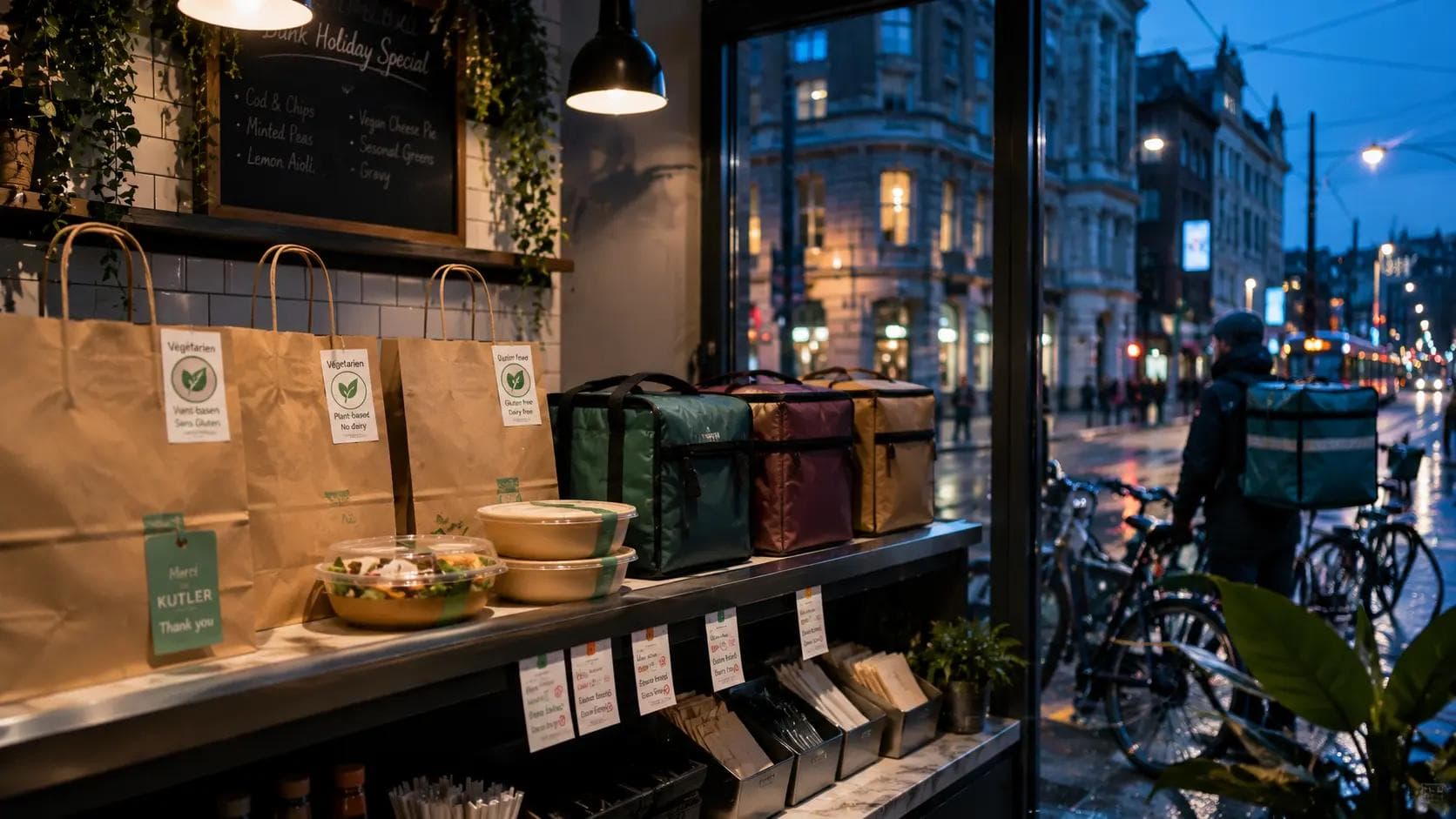
Another difference is menu localization. UK/EU customers have local favorites (e.g. fish & chips, shepherd’s pie, schnitzel, etc.) and dietary trends (lots of plant-based and free-from options). It pays to adapt your offerings or add native items when pushing into these markets.
Key Platforms - DoorDash, Just Eat, Deliveroo & More
While DoorDash has a growing presence in the UK (through the acquired Uber Eats network in some countries), Just Eat and Deliveroo dominate on many menus. In EU countries outside the UK, you may encounter additional apps like Glovo (Spain, Eastern Europe), Takeaway.com (Netherlands, Belgium), Foodora, Delivery Hero (Germany), Wolt, and others. Each app has its own signup process and commission model. Plan to sign up on multiple apps - multi-listing gives you maximum reach. Use Voosh’s dashboard to aggregate orders across platforms so your team isn’t juggling separate tablets and portals.
Market Trends & Consumer Preferences
Pandemic habits have stuck - Brits and EU customers love the convenience of on-demand delivery. Younger consumers (Millennials and Gen Z) are especially devoted to it. In fact, data shows Gen Z in general leads all age groups in delivery usage, often ordering multiple times per week. Quality expectations have also risen: 73% of UK diners now rank delivery speed as the #1 factor in choosing an app. That means late fees or delays hurt ranking on the app and reputation.
Insight: Restaurants that partner with these apps often see big gains. Industry data suggests a typical 42% revenue boost in year one of joining delivery platforms. With most delivery orders being higher value than dine-in tickets (thanks to add-ons and ease of ordering), the sales impact can be dramatic. The key is to manage costs and customer satisfaction so that the net profit lifts, too.
Preparing Your Restaurant for UK/EU Delivery
Before you expand, plan and train carefully:
- Menu & Pricing: Tailor your menu for delivery - include best-sellers and dish variations that travel well. Remove anything that doesn’t reheat or pack nicely. Adjust prices for UK/EU economics: account for the 20% VAT, higher commission rates, and stronger currency exchange. (For example, a $20 entree in the US might need to be ~£18-22 in the UK to yield the same net revenue.) Always list menu items and modifiers clearly in the app.
- Fees and Payments: Understand each app’s fee structure. In the UK, most apps automatically include VAT in your invoice - but you’ll still pay commissions on top of that. Look into “own delivery” options: DoorDash (UK) sometimes offers lower commissions if you use your own drivers or integrate a local courier. Ensure your accounting can handle split deposits or currency differences. Consider Voosh’s financial reconciliation tools to automate matching the app payouts with your bank deposits (reducing manual errors and chargebacks).
- Staff Training: Delivery can double your order volume. Train staff to handle online orders efficiently: assign a “delivery pickup” station, double-batch popular items, and use the app’s prep notes (often there’s a special instructions field). Since UK/EU customers often include special requests (e.g. eco-friendly packaging, cutlery requests), embed these options clearly in your process. Voosh’s Restaurant Dashboard can push new orders straight into your POS, so you don’t miss a DoorDash ping.
- Health & Safety Compliance: The UK and EU have strict food hygiene and allergen labeling laws. Make sure your menu descriptions on apps meet local regulations. Train drivers (if using in-house delivery) on hygiene protocols.
- Local Payment Methods: Some customers prefer local wallets or link sharing (e.g. Apple Pay, Google Pay are common, but also consider local options like Monzo in the UK). Enable all available payment methods on the delivery apps for each country to avoid losing sales.
Strategies to Maximize Orders on UK/EU Apps
Once live on the apps, use a mix of marketing and tactics to drive orders:
- Sponsored In-App Ads: Platforms like DoorDash and Uber Eats (and UK’s Deliveroo/Just Eat) offer self-serve ads or “sponsored” restaurant listings. These paid spots boost visibility in search results within the app. Investing in ads around peak times (weekends, lunch hour) can significantly increase impressions and orders. For example, one case study showed 8x return on ad spend using sponsored listings on DoorDash. (Use Voosh’s Promotion Manager to track whether the extra sales cover the ad spend.)
- Local Promotions & Offers: Launch deals that resonate locally. Consider UK-specific holidays (e.g. Christmas, Bank Holidays, Diwali in the UK) or EU events. Voosh’s AI-driven promotion tools let you tailor offers by region or even neighborhood - for instance, a “London Lunch Special” on lunchtime Grubhub orders, or an “EU Student Discount” near universities. Always align promotions with inventory to avoid overstock or waste.
- Loyalty and Engagement: Encourage repeat business with loyalty programs. Some apps allow you to provide digital stamps or rewards through their ecosystem. If not, redirect delivery customers to your first-party channels: include a small coupon code or flyer in the delivery bag (e.g. “Use code LOVEUK for 10% off on our website order” - capturing customer contact). Internally, treat positive reviews and repeat orders as a signal to send a thank-you email or text.
- Cross-Promotion: Partner with local businesses or events. For example, if a music festival or sports event is in town, create a themed menu item or combo and promote it via the delivery app banners. UK customers responding to local culture can give you an edge over generic menus.
- Customer Support & Reputation: In the UK/EU, online reputation matters a lot. Actively monitor and respond to reviews on each platform. A one-star review can significantly drop your ranking on an app; conversely, a burst of positive feedback can boost visibility. Use Voosh’s review aggregation to respond quickly and learn common complaints (e.g. packaging issues or late deliveries) so you can address them operationally.
Tech and Operations Optimizations
Efficient use of technology can improve your delivery operations across borders:
- Integrated Dashboards: Use Voosh’s unified dashboard to view all delivery data in one place. For a UK/EU expansion, it’s especially helpful to see orders from each country in one report. Compare metrics like acceptance rate, average order value, and refund incidents by market. Quickly spotting that, say, one city has a higher cancellation rate might prompt an investigation (maybe traffic issues, or a menu item that doesn’t travel well locally). Voosh data shows that multi-unit chains integrating Voosh see error-chargebacks drop by 25% on average, freeing up staff time.
- AI and Automation Tools: Automation saves labor. For example, Voosh’s AI can auto-respond to order adjustment requests or low battery errors (like a customer calling to cancel). Use automated workflows for refunds or dispute claims so your team isn’t manually filling out dozens of forms per week. Also leverage AI insights: if Voosh flags that a particular dish sells out too fast in London, you can prep more in advance.
- Localized Staffing & Ops: Consider cross-training servers and cooks on delivery processes. In the UK/EU, your staff may need to handle different equipment (e.g. scoops for curry sauces, labels in local language). If operating kitchens abroad, hire bilingual staff or use translation tools in your order aggregator. Remind teams to package orders for a longer journey - EU roads or remote addresses can increase delivery time.
- Performance Tracking: Keep an eye on the KPIs that matter. According to experts, top-ranking restaurants on apps achieve around 90% order acceptance and under 20-minute prep time. Track these with your Voosh dashboard (see “Food Delivery KPIs: Key Metrics”). For example, a 5% drop in acceptance rate on Deliveroo UK might indicate kitchen overload or technical issues - address it before your ranking falls.
Action Plan for UK/EU Expansion
1. Research & Signup: Identify the right apps per country and create accounts. Prepare digital assets (menus, photos) tailored to each market’s language and cuisine.
2. Menu Audit: Review dishes to include local flavors or combos (like “Sunday Roast for Two” on UK apps). Adjust portion sizes as needed.
3. Staff Training: Teach teams about the apps, reviewing platform tutorials. Run a soft-launch day to practice handling only delivery orders.
4. Launch Promotions: Start with a welcome offer (e.g. 15% off first order). Later, use Voosh’s analytics to send coupons to repeat customers in each region.
5. Monitor & Iterate: Use Voosh reporting to watch sales by city and platform. If an item isn’t moving, replace it. If complaints rise, tweak processes. Continual adjustment is key.
By treating each UK/EU market as its own audience and using Voosh’s tools to centralize data, even small operators can act like multi-region brands. With the right prep and local focus, restaurants can tap the £10+ billion UK/EU delivery opportunity with confidence.
Ready to expand overseas? Book a demo with Voosh to see how our dashboard and automation solutions make global delivery growth manageable and profitable.