Managing Multiple Virtual Brands on Delivery Apps
Summary Highlights
Running multiple virtual brands? Learn how to manage disputes, reviews, downtime, and promotions across every brand and platform from one place.
The opportunity is obvious. The operational headaches? Nobody talks about those.
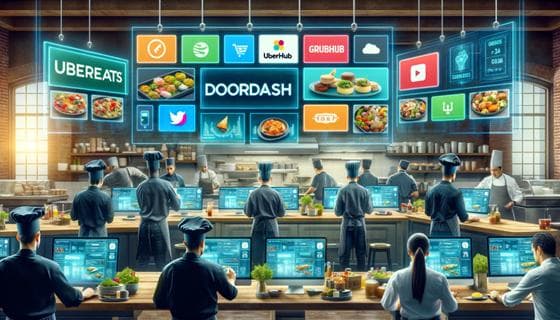
If you've launched a virtual brand out of your existing kitchen, you already know the appeal. Same staff, same equipment, same four walls - except now your DoorDash and Uber Eats dashboards show an extra storefront bringing in revenue you weren't generating a year ago.
A virtual brand is a delivery-only restaurant concept that operates out of an existing commercial kitchen. Most operators launch one to use idle capacity - but running two, three, or more virtual brands across DoorDash, Uber Eats, and Grubhub multiplies every delivery operations task: disputes, reviews, downtime, promotions, and payouts.
The "how to launch a virtual brand" content is everywhere. What's harder to find is honest advice on what happens after launch - when you're managing three delivery identities from one kitchen and things start getting chaotic.
This is that guide.
The Real Upside - and the Hidden Complexity
One Kitchen, Multiple Revenue Streams - The Math That Works
The unit economics of virtual brands genuinely work. Host kitchens operating virtual brand partnerships can pull in an additional $5,000 or more in weekly sales from concepts that cross-utilize existing ingredients and prep staff. A Grubhub survey found that 41% of independent restaurant operators are already running at least one virtual brand - and nearly half of those said they planned to add three or more concepts within a year.
The appeal is structural. You've already paid for the lease, the equipment, and the labor. A second or third delivery brand on top of that uses capacity you'd otherwise leave on the table, literally. Franchise operators have noticed: Denny's added a virtual hot dog brand to its company restaurants and reported a roughly 0.5% lift in same-store sales purely from that incremental revenue stream.
For multi-unit operators, the math multiplies quickly. Ten locations, three virtual brands each, on three platforms? That's 90 delivery storefronts generating revenue - and requiring management.
Where It Gets Complicated: The Multiplier Effect
Here's the part of the virtual brand conversation that doesn't get enough attention.
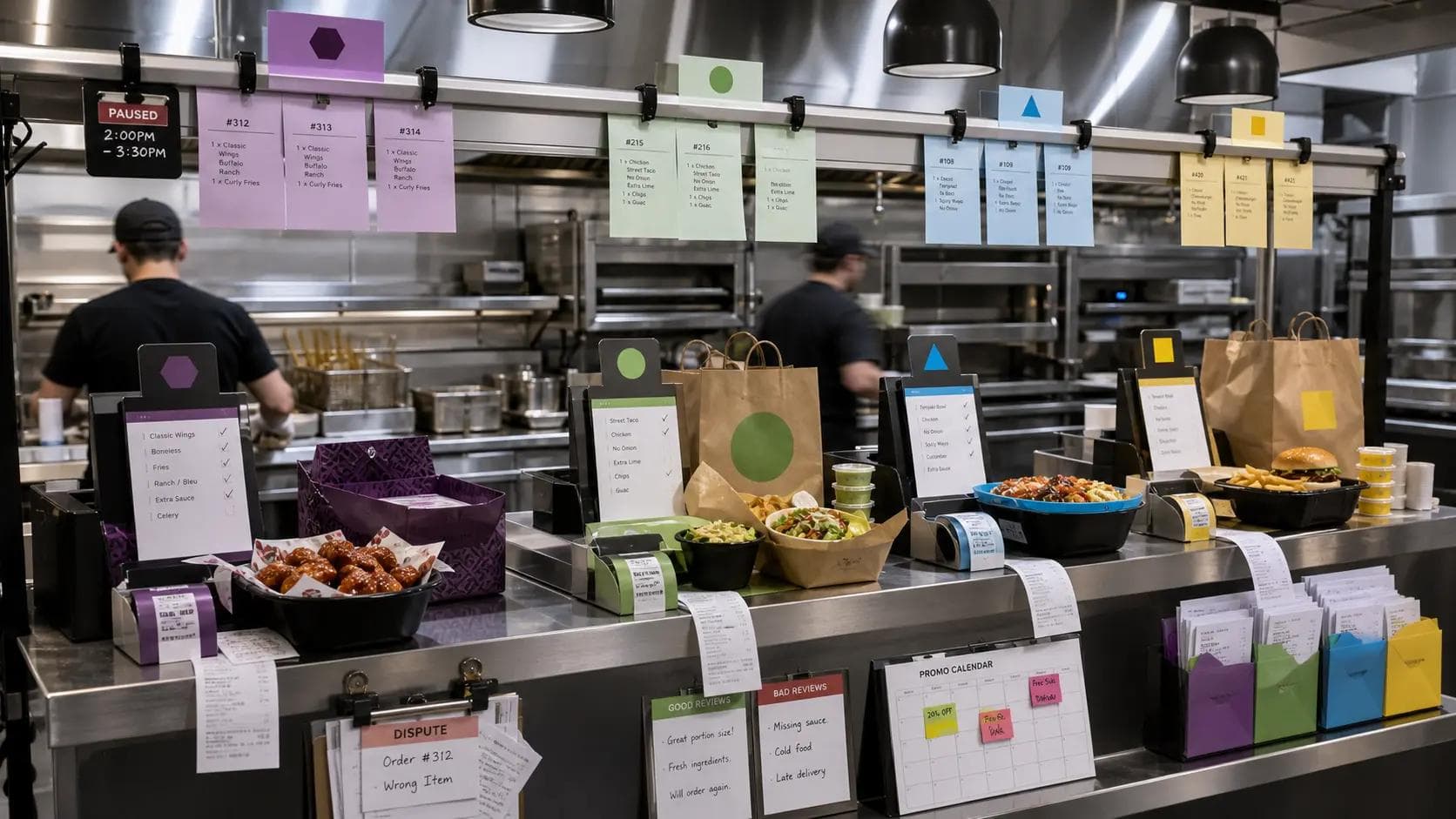
When you run one brand on one platform, you have one dispute queue, one review stream, one set of store hours to keep current, one promotion calendar, one payout to reconcile. When you run three virtual brands on three platforms, you have nine of each. The work doesn't scale linearly with your revenue.
Most operators discover this the hard way - usually around the time they realize their ops team is logging into four different tablet dashboards to check on disputes, then switching to a spreadsheet to track review responses, then hopping back into each platform's merchant portal to check if a promo is still running correctly. It's manageable for a week. It's unsustainable for a quarter.
5 Delivery Operations That Multiply With Every Virtual Brand You Add
1. Dispute Volume Goes Up Per Storefront
Every delivery order carries dispute risk - wrong items, missing items, customer claims of non-delivery. Platforms like DoorDash and Uber Eats let customers flag orders, and when they do, you get charged unless you appeal.
One restaurant location running two virtual brands on three platforms has six storefronts. If your dispute rate is 1-2% of orders (industry-standard range), and each storefront is doing 50+ orders a day, you're looking at potentially dozens of disputes per week across the full portfolio - each one requiring a timely, documented response to recover the revenue.
Most operators can keep up with disputes on one brand. Three brands into the mix, and disputes start slipping through because nobody's responsible for checking Brand C on Platform 2. That's money left behind.
2. Review Streams Split by Brand - Not by Kitchen
Your chicken wing virtual brand and your taco virtual brand share a kitchen. They do not share a reputation.
When a customer orders from Brand A and has a bad experience, they leave a review on Brand A's DoorDash profile. If a different customer orders Brand B and has a great experience, that four-star review goes to Brand B. These two streams are completely separate in the eyes of delivery platform algorithms - and in the eyes of customers.
That's a good thing when you're protecting brands from bleeding each other's negative reviews. It's a harder thing to manage when you're trying to monitor and respond to reviews across six, eight, or twelve storefronts. Response time matters. Platforms factor review response behavior into their scoring, and leaving reviews unanswered for days - especially negative ones - compounds over time into lower ratings.
3. Downtime Hits Every Brand at Once
This one catches operators off guard.
When your kitchen goes offline - a tablet dies, a printer jams, a staff emergency forces you to pause orders - every single virtual brand operating from that kitchen goes dark simultaneously. That's not three separate downtime events. It's one kitchen failure with three (or more) revenue streams paused at once.
A 200+ location QSR brand tracked this carefully and found it was losing meaningful at-risk delivery sales to unplanned downtime that could be caught and corrected faster with the right tooling. The math gets worse for multi-brand operators because the revenue exposure per downtime minute is multiplied by the number of active brands.
4. Promotions Compete Across Your Own Concepts
You launch a 20% off promotion on your wing brand for a Sunday night football push. Then your taco brand runs a buy-one-get-one deal the same weekend. A customer who would have ordered both is now choosing between your discounts - and you've effectively funded the cannibalization of your own concepts.
Managing promotions across multiple virtual brands on multiple platforms requires a level of coordination that simply doesn't exist when each brand is managed separately. Without cross-brand visibility, you're flying blind on whether your promotional spend is generating new customers or just shuffling existing ones between your own concepts at a discount.
5. Payouts Become Harder to Reconcile
Each virtual brand gets its own payout from each platform. Three brands × three platforms = nine separate payout transactions to track, each with its own commission structure, adjustment items, and potential discrepancies.
Operators who run virtual brands on top of their core concept often find themselves with a reconciliation puzzle that spans 10+ platform payout documents per week. Understanding which brand is actually profitable - after commissions, adjustments, and promotion costs - requires clean data that most platform dashboards don't provide in an aggregated view.
What Smart Multi-Brand Operators Set Up Before Scaling
One Dashboard to Rule All Storefronts
The first and most important decision multi-brand operators make is choosing a centralized management layer that sits across all delivery platforms and all brands. Without it, every operational task - disputes, reviews, downtime, promotions - gets done in a siloed, manual workflow.
A centralized delivery intelligence platform gives your team a single view of every storefront's health: dispute status per brand, review ratings by concept, which locations are currently online, and which promotions are active. Instead of logging into four platforms and cross-referencing spreadsheets, your ops team works from one place.
Voosh's marketplace management dashboard was built precisely for this: operators with multiple brands and multiple locations use it to maintain visibility across DoorDash, Uber Eats, Grubhub, and Google - without jumping between portals.
Automated Dispute Filing - Brand by Brand
Manual dispute management at scale is not a strategy. When you're filing appeals for nine storefronts, the work becomes a full-time job - and a reactive one at that, since platforms have filing windows.
Automated dispute resolution tools identify disputed orders per brand and file appeals with supporting documentation, within the platform's required timeframe, without requiring a human to catch each one. For multi-brand operators, this is not optional. The revenue exposure from unappealed disputes across a multi-brand portfolio adds up fast.
Look for a solution that tracks dispute resolution per brand - so you can see whether Brand B's dispute win rate is lower than Brand A's and diagnose why.
Keeping Review Reputation Separate Per Concept
Review management for virtual brands requires brand-level discipline. Each concept has its own reputation to build, and how you respond to reviews (both positive and negative) shapes that reputation over time.
A few practical principles for multi-brand review management:
- Never respond to a review on Brand A by mentioning Brand B - customers have no idea both concepts share a kitchen, and cross-pollination erodes trust
- Set different response tones per brand that match each concept's identity
- Track star ratings per brand weekly, not just per location - a strong core concept can mask a struggling virtual brand if you only look at location-level averages
- Respond to every negative review within 24 hours, regardless of which brand it hits
Voosh's Reviews & Ratings feature manages review responses across DoorDash, Uber Eats, Grubhub, and Google from a single unified inbox - with AI-assisted replies or full manual control, depending on your preference.
The Downtime Problem That Can Wipe Out Multiple Revenue Streams in Minutes
Let's do some math.
Say you're running three virtual brands out of one kitchen, and collectively they average 150 delivery orders per day across all platforms. Average ticket is $22. That's $3,300 in daily delivery revenue.
An unplanned 2-hour downtime during peak dinner hours - say a tablet goes unresponsive and no one catches it for 120 minutes - could cost you 30-40% of that peak-window revenue. Call it $400-$500 per incident. Across three brands, with all storefronts offline simultaneously.
Now multiply that by the number of downtime incidents per month a typical kitchen experiences without active monitoring. The risk compounds.
The solution has two parts: real-time alerts that catch when any storefront goes offline, and the ability to reopen all affected brands across all platforms quickly - without logging into each platform individually.
Operators who have automated downtime recovery typically find they recover a significant portion of at-risk revenue that previously disappeared silently. For virtual brand operators, this is especially valuable because the exposure is multiplied by concept count.
How to Run Promos Across Multiple Virtual Brands Without Cannibalizing Yourself
Promotions for virtual brands work best when they're differentiated by customer segment, daypart, or occasion - not just slapped on simultaneously across all concepts.
Segment by daypart. If your taco brand does better at lunch and your wing brand peaks on Friday evenings, schedule promotions accordingly. Running a taco promo Sunday night competes with your wings promo in the same customer session.
Segment by platform. If your wing brand dominates on DoorDash in your market but your dessert concept has better traction on Uber Eats, run platform-specific promotions that reinforce where each brand is already performing. Don't apply a blanket 15% discount across all brands on all platforms - that's margin going to customers who would have ordered anyway.
Track new vs. returning customers per brand. The goal of a promotion is to acquire new customers or reactivate lapsed ones - not to discount repeat customers who'd order at full price. If you can't see whether your promotional orders are coming from new or returning customers, per brand, you're funding discounts you don't need.
Voosh's Promotions Manager lets you configure, manage, and track promotion performance across platforms from a centralized dashboard, so you can see what's working at the brand level - not just as an aggregate.
A Practical Checklist Before You Launch Your Next Virtual Brand
Before you spin up another concept, run through this. It's the infrastructure checklist most operators wish they'd had on day one.
- Centralized management dashboard confirmed.
Centralized management dashboard confirmed. You have a single place to monitor all brands across all platforms - not a collection of bookmarks to various merchant portals. - Automated dispute coverage in place.
Your dispute workflow doesn't require manual intervention to catch and file appeals for every brand on every platform. - Review response protocol per brand.
Each concept has a defined tone, response time target (24 hours max for negatives), and a designated owner or automated tool. - Downtime alert and reopen workflow.
You have a mechanism to detect when any brand goes offline and restore it quickly - ideally automatically. - Promotion calendar coordination.
Before any brand launches a promo, it gets checked against the other brands' schedules to prevent cannibalization. - Per-brand P&L baseline.
You know each virtual brand's gross revenue, commissions, promotion costs, and dispute recoveries as separate line items - not averaged into your core concept's financials. - Delivery app hours synced.
All virtual brand storefronts have accurate, consistent hours set across every platform - including holiday schedules.
The Bottom Line
Virtual brands are a real, proven revenue opportunity for multi-unit operators who want to monetize existing kitchen capacity without adding real estate or staff. The operational complexity is real too - but it's manageable if you treat the delivery platform layer with the same systematic attention you give the kitchen itself.
The operators who scale virtual brands successfully are the ones who build centralized delivery operations infrastructure early. Not after they're drowning in nine separate dispute queues.
If you're running virtual brands or planning to, Voosh was built for exactly this kind of multi-brand, multi-platform environment. One dashboard, automated dispute recovery, unified reviews, centralized promotion management, and real-time downtime controls - all covering DoorDash, Uber Eats, Grubhub, and more.
Ready to see how it works across your full brand portfolio? Book a demo.